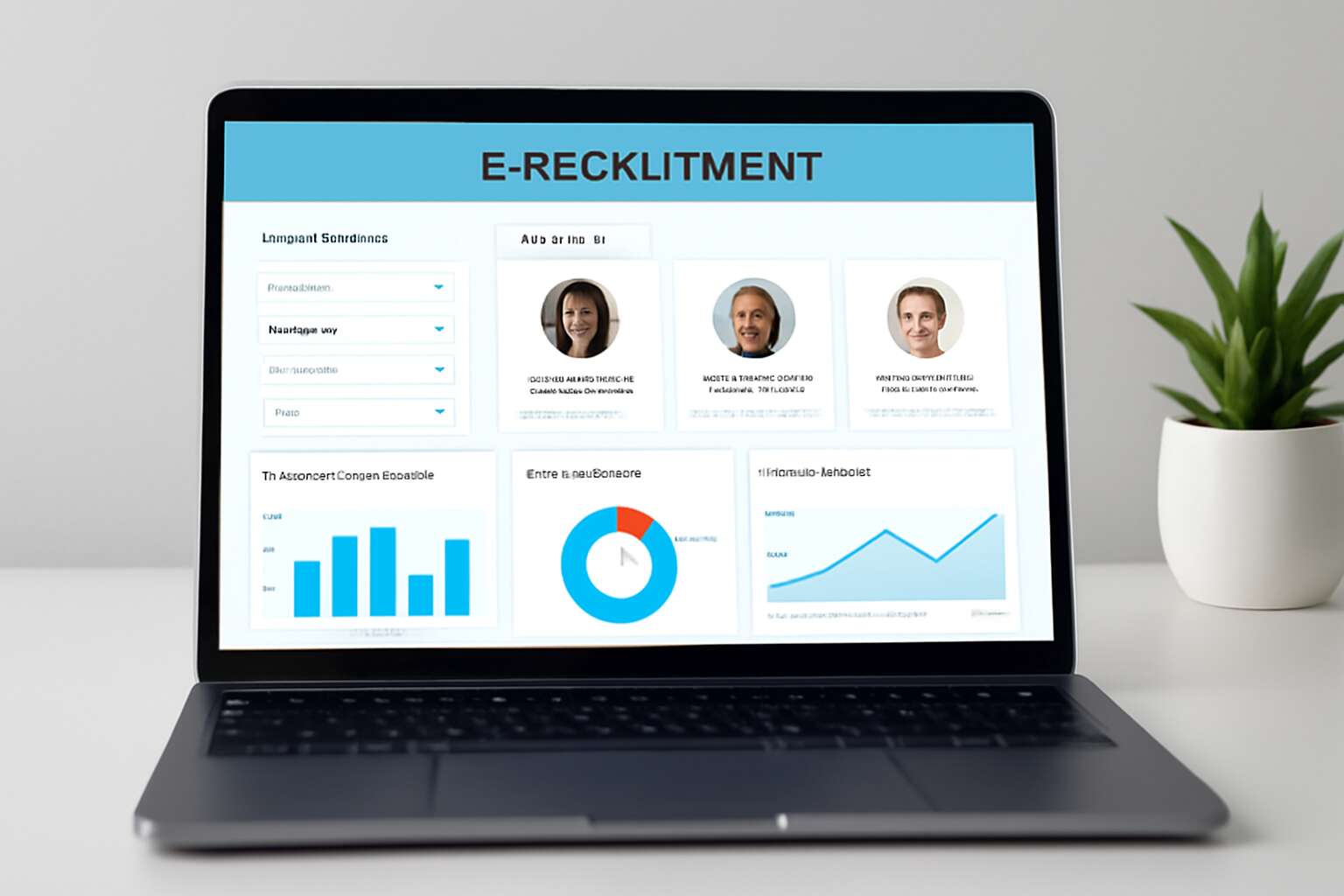
Understanding the Digital Recruitment Landscape
What a modern e recruitment register is and why it matters
South Africa’s hiring scene is fast becoming digital—more than 70% of roles are now filled through online channels. An e recruitment register sits at the heart of this shift, turning scattered CVs into a live talent pool that can be accessed in real time. It’s a practical edge in competitive markets!
A modern system is more than an archive. It curates candidate momentum, automates screening, and tracks compliance with data rules. You gain speed without sacrificing quality, and hiring teams gain clarity in a noisy market.
- centralised talent pool
- real-time visibility
- compliance tracking
From Cape Town to Pretoria, this approach reshapes recruitment strategy. The register becomes a quiet agent of efficiency, reducing delays and turning talent into tangible outcomes.
Core features to look for in an e-recruitment platform
Across South Africa, the hiring landscape is digitalizing fast, and a well-chosen platform can cut time-to-fill by a surprising margin. An e recruitment register acts as the nerve center of this shift, turning scattered CVs into a live pool that managers can tap in real time. It’s not just storage—it’s momentum, clarity, and a quiet edge in a crowded market!
Understanding what to look for helps separate good tools from great ones. Core features to prioritize include:
- Clear, role-based candidate pipelines with live status updates
- Automated screening rules and workflow automation
- Audit trails and POPIA-aligned data governance
Additionally, seek UX that reduces friction on mobile devices and analytics that translate into action—velocity, bottlenecks, and quality signals.
Who benefits from a digital recruitment register
South Africa’s hiring scene is sprinting online, with managers racing to fill roles before the next wave of applicants arrives. The e recruitment register sits at the center of this shift, turning scattered CVs into a live pool that teams can tap in real time. Understanding the digital landscape helps teams balance speed with quality!
- HR teams need fast candidate triage
- Hiring managers seek clarity and momentum
- Job seekers expect transparent, real-time updates
From a candidate’s perspective, digital recruitment means more visibility and faster feedback; from an organisation’s side, it means better signal quality, a clearer view of bottlenecks, and more responsible data governance.
Data protection, compliance, and governance for online hiring
Today, online hiring dominates South Africa’s talent market, and speed without governance loses trust. A recent SA survey shows 78% of candidates disengage when updates stall, underscoring the need for transparent, real-time feedback. The e recruitment register sits at the center of this shift, converting scattered CVs into a protected, auditable pool that respects POPIA and other privacy imperatives.
- Consent with purpose limitation
- Retention schedules and secure storage
- Role-based access and full audit trails
In practice, this approach gives teams a single source of truth and reduces bottlenecks while safeguarding personal data. The value of the e recruitment register is clear, aligning hiring with South Africa’s regulatory expectations and turning governance into a credential that hires trust.
Operational Benefits of a Digital Hiring Register
Streamlining candidate intake and application management
In South Africa’s fast-moving job market, nearly 40% of applicants abandon online forms mid-application—a hidden cost that slows growth. The e recruitment register turns that friction into flow, turning scattered submissions into a single, searchable ledger that makes every candidate journey trackable and fair.
Operational benefits flow from streamlined candidate intake and application management: automatic routing to roles, centralized data, fewer duplicates, and faster screening. With an auditable trail, teams reduce compliance risk while preserving a human touch in every interaction.
- Faster shortlisting and onboarding
- Greater data accuracy and auditability
- Unified analytics for smarter hiring decisions
Beyond efficiency, this shift changes how organizations value time and potential, inviting a more intentional, humane hiring ethos across South Africa’s diverse talent pools.
Centralized candidate profiles and search capabilities
In South Africa’s fast-moving job market, almost 40% of applicants abandon online forms mid-application—a hidden drag on growth. The e recruitment register turns that friction into flow, transforming scattered submissions into a single, searchable ledger that tracks every candidate journey with fairness and clarity.
Operational benefits flow from centralized candidate profiles and search capabilities. The e recruitment register consolidates resumes, cover letters, and assessments into unified profiles, accessible to hiring teams with role-based visibility. Rapid routing, deduplication, and auditable trails reduce risk while preserving the human touch that defines strong hiring.
- Unified candidate profiles across departments and roles
- Advanced search with filters for skills, location, and experience
- Versioned notes and secure, auditable access
Beyond speed and accuracy, this approach honors time and potential, inviting a more humane, South Africa–centric hiring ethos. The result is clarity in a crowded market, where every CV has a rightful chance to shine.
Seamless integration with ATS and HRIS
Seamless integration with ATS and HRIS isn’t optional—it’s a workflow transformer. In South Africa, data silos slow decisions and push time-to-fill upward. When systems align, the e recruitment register becomes a single, auditable heartbeat for hiring. Real-time updates keep candidate journeys synchronized, role-based visibility protects sensitive data, and consistent information slashes duplication and mistakes across teams.
- Real-time candidate status and routing across departments
- Unified compliance logs and auditable trails
- Deduplication that prevents cross-posted submissions from fragmenting the profile
This harmony translates to faster, fairer hiring without eroding the human touch that defines great teams.
Automation of screening, scheduling, and communications
Automation in hiring isn’t a luxury; it’s a lifeline that keeps teams connected. In South Africa’s bustling job market, the e recruitment register slashes wait times by automating screening, scheduling, and communications—teams report up to 25% faster time-to-hire when steps run automatically. When a candidate enters the pipeline, the system routes them to the right reviewer, syncs calendars, and delivers clear, timely updates. The result is a steadier workflow, like rain after a long drought, that preserves care and fairness alike.
- Automated screening that filters resumes against role fit and policy requirements
- Calendar synchronization that eliminates back-and-forth and prevents double-bookings
- Consistent, personalized communications that keep candidates informed throughout the process
This operational harmony ripples outward: fast, fair decisions; fewer miscommunications; and more time for teams to focus on people rather than paperwork.
Analytics and reporting for faster decision-making
In South Africa’s crowded job market, a 25% quicker time-to-hire isn’t a boast but a measurable ripple when data guides every step. The e recruitment register turns raw numbers into a compass, translating candidate flows into decisive insight and nurturing trust as decisions crystallize.
Analytics and reporting power the system to forecast needs, size bottlenecks, and curb drift.
- Real-time dashboards that slice data by stage, role, and source.
- Time-to-fill, funnel conversion, and quality-of-hire metrics.
- Source ROI and compliance indicators at a glance.
This operational clarity accelerates approvals, aligns stakeholders, and frees HR teams to focus on people rather than papers—turning data into humane, timely decisions.
Security, Compliance, and Data Privacy in e Recruitment
Data protection requirements for online recruitment
Trust is the currency of hiring, and in South Africa’s digital landscape, data privacy is the shield that keeps that trust intact. Security, compliance, and data governance are not mere checkboxes—they shape who is invited into records and how every candidate is treated. The e recruitment register must align with POPIA and PAIA, enforcing encryption, strict access controls, and clear retention rules that respect people, not data points.
To translate that philosophy into practice, consider these guardrails:
- Data minimisation and purpose limitation
- Role-based access and authentication
- Encryption in transit and at rest
- Retention and secure deletion
Within a recruitment register framework, these measures nurture consent, transparency, and resilience against incidents—privacy as proactive discipline.
Access controls and audit trails
Trust wears a cloak; in SA, 72% of job seekers say data privacy governs their decision to apply. The e recruitment register stands as a boundary between curiosity and intrusion, a vow etched in code.
Access controls define who may glimpse the records and when; it’s guardianship, signed with role-based access and strict authentication.
- Role-based access and authentication
- Encryption in transit and at rest
- Retention rules and secure deletion
Audit trails are nocturnal witnesses: every login, export, or modification leaves a trace, a tamper-evident ledger that speaks to POPIA and PAIA. The e recruitment register becomes a living archive.
Privacy is not a passive shield but a proactive discipline—an ethical pulse I’ve witnessed in quiet boardrooms that keeps the records safe while inviting trust to linger. Consent and access are earned in quiet measure!
Regulatory considerations by region
In South Africa, 72% of job seekers say data privacy governs their decision to apply, and that truth lives at the heart of the e recruitment register. It is a boundary that guards curiosity with grace, turning potential intrusion into invited trust!
Security and governance travel by region, not by whim. The e recruitment register must align with POPIA and PAIA in SA, while echoing GDPR principles across Europe and the evolving privacy mosaic in the United States.
- South Africa: POPIA compliance, consent, breach notification
- European Union: GDPR data minimization and rights to access
- United States: sectoral rules and state privacy norms
Encryption, lawful retention, and transparent audits turn policy into peace of mind, inviting talent to engage with confidence.
Best practices for data retention and deletion
In South Africa, 72% of job seekers say data privacy governs their decision to apply. That truth sits at the core of the e recruitment register, where security and governance are treated as steadfast virtues rather than afterthoughts. Retention cycles and deletion policies are written into the fabric of trust, guiding every interaction with care.
Key practices include:
- Define data retention windows by purpose and data type
- Automate deletion or anonymization when consent ends or contracts lapse
- Move older records to secure archives with strict access controls
- Maintain transparent audits and ready breach notification to reassure candidates
Done well, the e recruitment register earns the trust it promises, becoming a sanctuary where talent engages with confidence, and the policy landscape feels like a compass you can rely on.
Implementation, Adoption, and ROI of an e Recruitment Register
Choosing the right platform for your organization
Implementation of an e recruitment register begins with mapping hiring workflows, selecting a platform that aligns with South Africa’s realities, and ensuring interoperability with existing ATS and HRIS. The right platform for your organization supports modular rollout, scalable security, and clear governance. A phased pilot validates candidate intake, screening, and scheduling within a unified system, turning scattered processes into a cohesive hiring narrative.
Adoption hinges on change management, training, and sustained support. To smooth the transition, teams benefit from clear sponsorship, early wins, and simple, repeatable workflows.
- Executive sponsorship and clear success criteria
- User-friendly interfaces and role-based task clarity
- Local language considerations and mobile access
- Transparent licensing and predictable cost models
ROI of the e recruitment register shows up as faster time-to-fill, higher-quality candidate pools, and reduced administrative overhead. In many South African teams, gains materialize within a single recruitment cycle, with analytics guiding future workforce planning.
Change management and user adoption strategies
“Process is the quiet engine of trust.” Implementation starts by mapping hiring workflows and choosing a platform that fits South Africa’s realities and plays well with your ATS and HRIS. The e recruitment register becomes the backbone for modular rollout, security, and governance. A phased pilot validates intake, screening, and scheduling in one unified system.
Adoption hinges on people, not programs—leadership backing, practical training, and ongoing support. Provide role-based onboarding, bite-sized practice, and fast feedback loops. Start small with measurable wins and ensure mobile access and local language options to keep teams engaged!
- Role-based onboarding
- Bite-sized training
- Feedback loops
ROI surfaces as quicker time-to-hire, richer candidate pools, and lower admin loads. In SA teams, gains appear within a cycle, guided by analytics for smarter workforce planning.
Measuring ROI: time-to-hire, cost-per-hire, quality of hire
Implementation rests on mapping hiring workflows and selecting a platform that fits South Africa’s realities, harmonising with your ATS and HRIS. The e recruitment register becomes the backbone for modular rollout, security, and governance. A phased pilot validates intake, screening, and scheduling in one unified system.
Adoption is a human affair—leadership backing, practical training, and ongoing support turn software into a working culture. To keep teams engaged, provide role-based onboarding, bite-sized practice, and fast feedback loops.
- Role-based onboarding
- Bite-sized training
- Feedback loops
ROI surfaces as quicker time-to-hire, lower cost-per-hire, and stronger quality of hire. In South Africa, gains appear within a cycle, guided by analytics for smarter workforce planning in the e recruitment register.
Migration roadmap: from legacy systems to a digital register
Migration to a digital register is not merely a software swap; it is a rewriting of conversation, a tide turning away from scattered data toward a single, singing spine. Implementation begins by mapping hiring workflows and aligning them with South Africa’s realities, weaving security, governance, and compliance into one trusted system. A phased pilot tests intake, screening, and scheduling, proving the concept before full roll-out.
Adoption is a human affair—leadership backing, practical training, and ongoing support turn software into a working culture. Adoption rests on three pillars:
- Role-based onboarding
- Bite-sized training
- Feedback loops
ROI surfaces as quicker time-to-hire, lower cost-per-hire, and stronger quality of hire. In South Africa, gains emerge within a cycle, guided by analytics for smarter workforce planning in the e recruitment register.
Case studies and vendor evaluation tips
Implementation is a dialogue with data. A digital e recruitment register rewrites conversations, turning scattered talent signals into a single, singing spine—tailored to South Africa’s realities. Case studies reveal phased pilots that validate intake, screening, and scheduling before a wide rollout across teams.
Adoption hinges on people. When leadership backs the shift and teams receive practical training with steady support, software becomes habit, shaping everyday hiring decisions rather than complicating them.
ROI materializes as faster time-to-hire, lower cost-per-hire, and sharper quality of hire—evident through analytics within the e recruitment register. For case studies and vendor evaluation, observe client references, security posture, and seamless system interoperability.
- Security and compliance alignment
- Interoperability with your ATS/HRIS
- Total cost of ownership and support




0 Comments