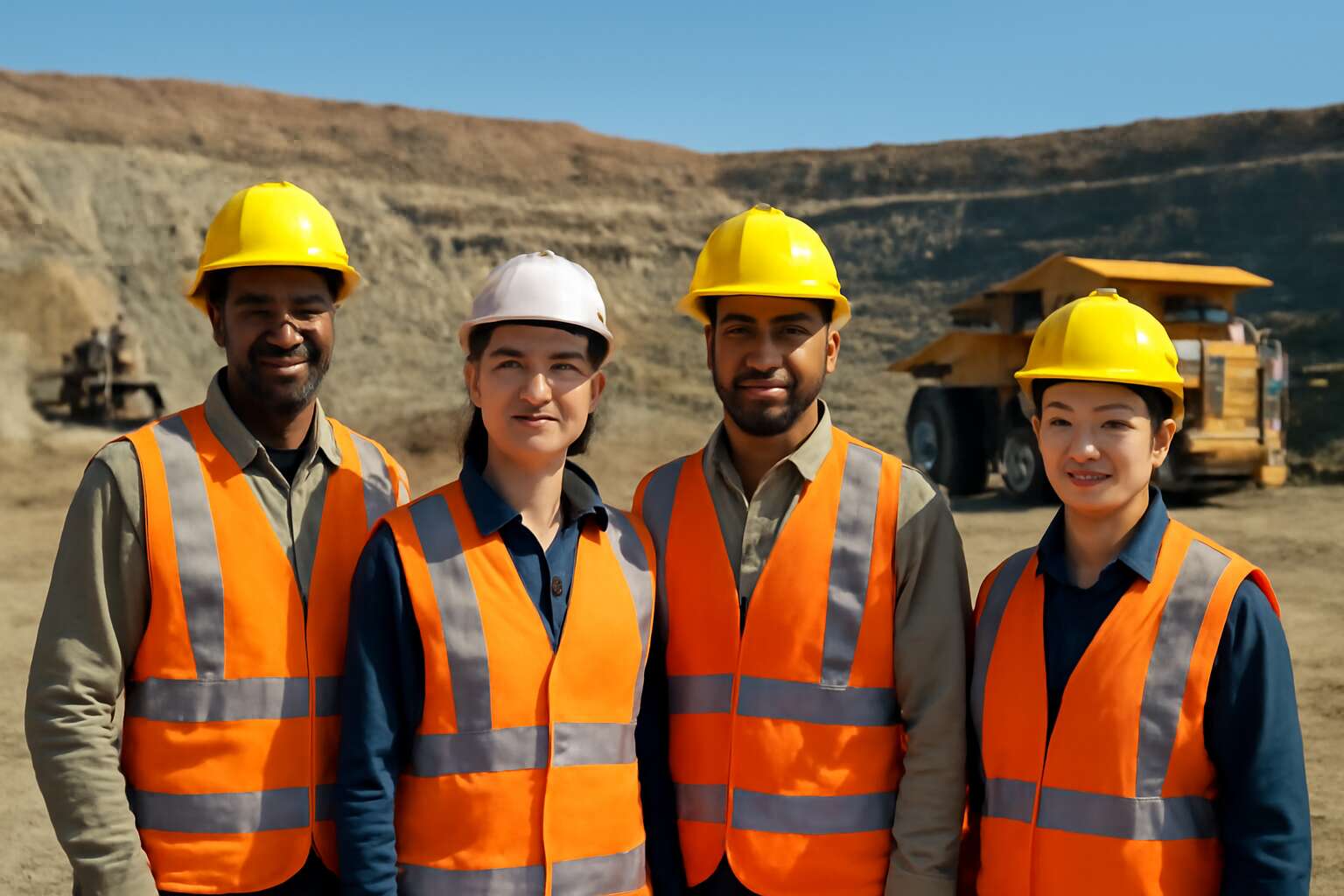
Global landscape of expat mining recruitment
Top regions for expat mining roles
Global mining teams move on talent more than terrain. Mobility can shave six months off a project timeline and improve safety through specialist coverage. In this global landscape, expat mining jobs recruitment is a core engine for delivering major projects on time, a fact that resonates in South Africa’s corridors of mining.
Key regions currently driving expat mining roles include:
- Australia and Papua New Guinea — robust, resource-rich belts
- Canada and the United States — North American majors
- West Africa and South Africa — African mining hubs
- Middle East and Latin America — energy and base metals
Across borders, project teams rely on skilled recruiters to align timelines, compliance, and culture. For South African readers, understanding these regions helps calibrate assignments within long-term project strategy.
In-demand job families for international miners
Global mining projects run on portable talent, a theatre where the cast travels as peaceably as suit-and-tie diplomats. Expat mining jobs recruitment acts as the backstage pass, threading schedules, regulatory strings, and cross-cultural cues into a single, coherent performance. For South Africa, it’s a practical map—showing where specialist skills are most likely to converge to keep major projects humming rather than stalling.
Here are the in-demand job families for international miners:
- Geologists and Reservoir Specialists
- Mining Engineers and Operations Managers
- Project and Construction Managers
- Health, Safety, and Environment (HSE) Specialists
- Supply Chain and Contracts Professionals
Talent matchmaking here is less about passports and more about posture—aligning skills with schedules to keep the mine lively and compliant.
Key recruitment channels used by mining operators
Global mining projects move on a clock as precise as any metronome, and expat mining jobs recruitment keeps that beat. In this arena, more than 60% of project-critical roles are filled from international pools within the first 90 days, a testament to how swiftly global networks align skill with schedule and keep mines humming.
Operators lean on a refined set of recruitment channels that cross borders and cultures with ease:
- Global recruitment agencies with sector specialization
- Company career portals and targeted mining job boards
- LinkedIn, professional networks, and headhunting for niche expertise
- Referrals, contractor pools, and regional partnerships with universities
This expat mining jobs recruitment ecosystem travels light, yet lands the right talent with quiet inevitability.
Understanding candidate expectations when relocating
The global landscape of expat mining jobs recruitment shifts as families weigh the move as a shared journey. For candidates relocating, practical questions outrun the romance of distant horizons: reliable housing, good schooling, access to healthcare, and schedules that respect life outside the mine. Community supports—neighborhood networks, language help, and safe housing—become the deciding factors as much as salary.
- Stable housing and school options
- Transparent relocation timelines and allowances
- Healthcare access and safety commitments
Across Southern Africa and beyond, operators who listen and align expectations with reality foster trust and reduce turnarounds. For South African professionals eyeing overseas postings, the relocation journey hinges on social support, language readiness, and clear visa guidance. When recruiters and mine sites keep that channel open—through transparent timelines and culturally aware onboarding—the workforce settles in with greater ease and the rhythm of production remains steady.
Sourcing and screening expat candidates for mining projects
Proactive talent sourcing strategies across borders
Mining’s distant drums call to seasoned professionals across borders, and the numbers listen back: expat mining jobs recruitment thrives when sourcing is proactive. In South Africa’s evolving mineral landscape, 68% of placements reach production readiness within 12 weeks once cross-border talent pools are tapped.
To source and screen expat candidates for mining projects, I map corridors of opportunity—universities, apprenticeship networks, and relocation hubs—embodying Proactive talent sourcing strategies across borders, seeking candidates whose records gleam with grit, safety discipline, and verifiable skill. Key steps include:
- Rigorous credential verification and regulatory compliance
- Technical assessments and safety simulations
- Cultural adaptability and communication fit
Each candidate is a seam of potential, chosen for more than skill—poise under pressure, clarity across time zones. With thoughtful outreach and precise screening, distance becomes delivery, and the right hands join the crew where the ore meets the sun.
Credential verification, safety certifications and standards
In South Africa’s mining corridors, that 68% production-readiness figure isn’t luck—it’s what you get when expat mining jobs recruitment pairs sharp talent with rock-solid credential checks. Credential verification and regulatory compliance sit at the top of the pegboard; without them, even the best drill bit wears out fast!
- Identity, qualifications, and professional registrations verified against issuing bodies
- Cross-border regulatory compliance and work-permit validation
- Safety certifications and standards alignment (ISO 45001, NOSA, site inductions)
- Reference checks and competency simulations to confirm real-world capabilities
From there, we layer safety simulations and cultural fit into the screening—because a skilled hand is useless if the team can’t communicate across time zones. expat mining jobs recruitment thrives where credential verification and safety standards are non-negotiable.
Cultural fit and adaptability assessment
Expat mining projects run on more than grit—they run on precise sourcing and screens. The strongest teams prove that good candidates aren’t just skilled; they’re the right fit for the drumbeat of a 24/7 site. “Culture fit is safety culture,” a field supervisor likes to say, and it lands with the impact of a hammer strike in SA’s corridors.
We target cross-border pools where relocation readiness couples with real-world performance. Sourcing and screening hinge on live competency simulations, site-induction drills, and candid talks that reveal adaptability to time zones, austere camps, and the tempo of a mining operation.
- Structured skill assessments and scenario-based interviews
- Cross-border compliance checks and visa-readiness
- Language, communication styles, and teamwork under pressure
That blend—rigorous sourcing plus cultural-fit screening—powers expat mining jobs recruitment with resilience and pace.
Candidate experience and communication best practices
“The mine runs on conversations that cut through the fog,” a field supervisor likes to say. In expat mining jobs recruitment, sourcing and screening must go beyond CVs. We test candidates with real-world tasks and candid conversations that reveal how they handle time zones, austere camps, and the tempo of a South African site.
Candidate experience shapes retention. Applicants deserve a transparent path—clear timelines, prompt feedback, and respectful, multilingual communication that never leaves them guessing. This elevates recruitment approaches from paperwork to practical promise.
Done right, sourcing and screening become pace and resilience on a remote site.
Compliance, visas, and legal considerations for expatriate miners
Work visas, permits, and work permit quotas
Compliance is the quiet rockstar of relocation programs—without it, ore never makes it past the border. A seasoned HR voice sums it up: “compliance isn’t a nuisance, it’s the backbone of a smooth relocation.”
Work visas, permits, and quotas are the backstage pass to who can work where and for how long. In South Africa, General Work Visas and Critical Skills Visas are the common routes, with sector quotas shaping scarce-skill placements. Ensuring visa status aligns with site permits is non-negotiable for mobility.
- General Work Visa status
- Critical Skills eligibility and lists
- Quota availability for the mining sector
Contracts should mirror rights and obligations, residency, and repatriation terms. When the legal scaffolding is solid, the focus shifts to productivity rather than paperwork—precisely why expat mining jobs recruitment matters, turning complex compliance into quiet confidence.
Labor laws, contracts, and severance terms for international hires
In SA’s mining corridors, roughly four in ten expatriate assignments stumble on compliance bottlenecks before the first drill date. That’s where expat mining jobs recruitment becomes a quiet, steel-nerved ally—turning red tape into a reliable rhythm and keeping the ore moving.
Compliance is the backbone; labor laws in South Africa—BCEA, LRA, COIDA—demand contracts that spell rights, duties, and safety expectations in plain English. Ensure visa status lines up with site permits and that residency, repatriation, and end-of-contract terms are hammered out with precision. When legal scaffolding is solid, teams translate potential chaos into productivity—and this is precisely where expat mining jobs recruitment thrives on clarity.
Within international hires, the contract should be a compass, not a trap. The following elements anchor stability:
- Residency and repatriation terms
- Severance and end-of-contract provisions
- Clear alignment of visa, permits, and site requirements
Health, safety, and insurance obligations for expats
Compliance in South Africa’s mining corridors is the quiet engine that keeps the ore moving—expat mining jobs recruitment hinges on contracts that translate BCEA, LRA, and COIDA into plain English, with visa status tightly aligned to site permits. Residency, repatriation, and end-of-contract terms should be hammered out with the same precision you demand from a punch list. When the legal scaffolding stands firm, teams operate with predictable cadence rather than chaotic improvisation—productive momentum.
Health, safety, and insurance obligations for expats are non-negotiable chapters of the contract. Expat miners must have access to medical coverage, workers’ compensation, and emergency repatriation arrangements. Safety certifications and site-specific training should be up to date, and incident reporting streamlined—because a minor lapse here echoes across the mine in minutes rather than days.
- Visa status, permits, and site clearance alignment
- Residency and repatriation provisions
- End-of-contract and severance clarity
Tax implications and repatriation planning
Compliance is the quiet engine that keeps South Africa’s mining corridors turning. For expat mining jobs recruitment, contracts bind visa status to site permits and residency rules with surgical precision. Residency, repatriation, and end-of-contract terms should be mapped as clearly as a punch list—so crews operate with steady cadence rather than drift.
Tax implications and repatriation planning demand front-loaded thinking. The contract should spell out tax residency, social security obligations, and any double taxation considerations; and it should specify who covers repatriation costs and when funds are released. Key touchpoints include:
- Tax residency determination and withholding regimes
- Double taxation treaty applicability
- Repatriation funding and timing
With that framework, expat miners can focus on the work—safe, compliant, and financially coherent—because the legal scaffolding stands firm.
Compensation, relocation, and retention for expat mining roles
Salary benchmarks and total rewards for international hires
Compensation for expat mining roles in South Africa sits at the intersection of global benchmarks and local cost realities. In the expat mining jobs recruitment arena, salary benchmarks often anchor a broader set of incentives, with base pay complemented by housing allowances, hardship stipends, and performance bonuses that reflect the site’s risk and location.
Relocation packages can determine the speed and success of a move! They typically cover visa support, travel, and initial housing, but the best operators also offer schooling assistance and settling-in services.
- Relocation stipend and travel costs
- Accommodation and housing search support
- Schooling and family integration assistance
- Repatriation planning and exit support
Retention hinges on more than a salary sheet; it rests on clear career pathways, ongoing training, and meaningful localization opportunities that let expats feel part of the long-term plan.
Relocation packages, housing allowances, and mobility perks
A strong relocation package is the compass that turns distance into opportunity. In expat mining jobs recruitment across South Africa, compensation blends global benchmarks with local realities. Base pay sits alongside housing allowances, hardship stipends, and performance bonuses that reflect site risk and remote locations.
- Relocation stipend and travel costs
- Accommodation and housing search support
- Schooling and family integration assistance
- Repatriation planning and exit support
Retention hinges on more than numbers; it travels with clear career pathways, ongoing training, and meaningful localization opportunities. When mobility perks accompany the salary package, expats feel part of the long-term plan. It’s not just a move—it’s a voyage with a future in the heart of South Africa’s mining tapestry.
On-site camp logistics and welfare benefits
More than half of expatriate assignments in South Africa’s mines are decided within the first three months. In expat mining jobs recruitment, compensation blends global benchmarks with local realities—base pay aligned to site risk, plus housing allowances, hardship stipends, and performance bonuses.
- On-site accommodation and security
- Nutritious meals and dietary support
- 24/7 medical care and mental health services
- Transport logistics and emergency evacuation planning
On-site camp logistics and welfare benefits anchor daily life, turning distance into belonging rather than burden.
Retention hinges on more than numbers; it travels with clear career pathways, ongoing training, and meaningful localization opportunities. Relocation and mobility perks are part of a long-term plan—repatriation planning, ongoing development, and regional deployment options. In this way, expat mining jobs recruitment becomes a voyage with a future in South Africa’s mining tapestry.
Retention strategies in remote mining sites
In expat mining jobs recruitment, compensation reads like a map—global benchmarks guiding base pay, while local risk and living costs shape the rest. A solid salary is complemented by housing support, hardship stipends, and performance bonuses, creating a total rewards package that travels well across South Africa’s remote mining landscapes.
Relocation and retention are planned as a long voyage. Repatriation planning, currency protections, and mobility windows ensure assignments feel purposeful rather than temporary.
- Structured repatriation planning and currency risk protections
- Rotational schedules that align family life with site productivity
- Regional deployment ladders and mentorship programs to sustain career momentum
Retention in remote sites hinges on more than money; it thrives where career pathways, ongoing training, and localization opportunities unfold as a continuous story—an enduring chapter in expat mining jobs recruitment.




0 Comments